Maybe we’ve been brainwashed, too
I’m reading the book Propaganda Girls: The Secret War of the Women in the OSS. It’s the story of four women who contributed to WW2 efforts in 1943/44 by creating and launching detailed propaganda campaigns aimed at breaking the morale of allied enemies.
I knew about this work. But I didn’t really understand the lengths these operatives went to – producing fake leaflets, newspapers, scripted broadcasts – even songs. It’s incredible what they accomplished and even more incredible is the detail and care that went into their work.
My career has centered around informing and influencing people with the written word. When I started this work in the late 90s/early 2000s, we worked mostly with print publications, which take time, energy, and money to produce.
Then came the internet. And suddenly, my world and the world sped up. Significantly.
So, this book has been fascinating to me to understand the lengths we went to, even in the 1940s, to shift minds.
Today, it’s not even a little bit hard to spread a lie. Half-truths play on people’s fears. Lies are told so many times that they begin to sound like truth. There’s literally nothing to it anymore, so long as you have a few minutes and a smartphone.
Back in the ‘40s, it was so much different. And they still accomplished what they wanted to accomplish.
Can’t help but think about how algorithms work. How advertisers mess with our brains to sell products, and how entire industries can be brought down with a well-timed viral moment.
I still listen to an album released in 1998, titled “Maybe You’ve Been Brainwashed Too” by the New Radicals.
It’s a good album. I recommend it. I also think we live in a day and age where we should all be asking ourselves the question: Am I being brainwashed, too?
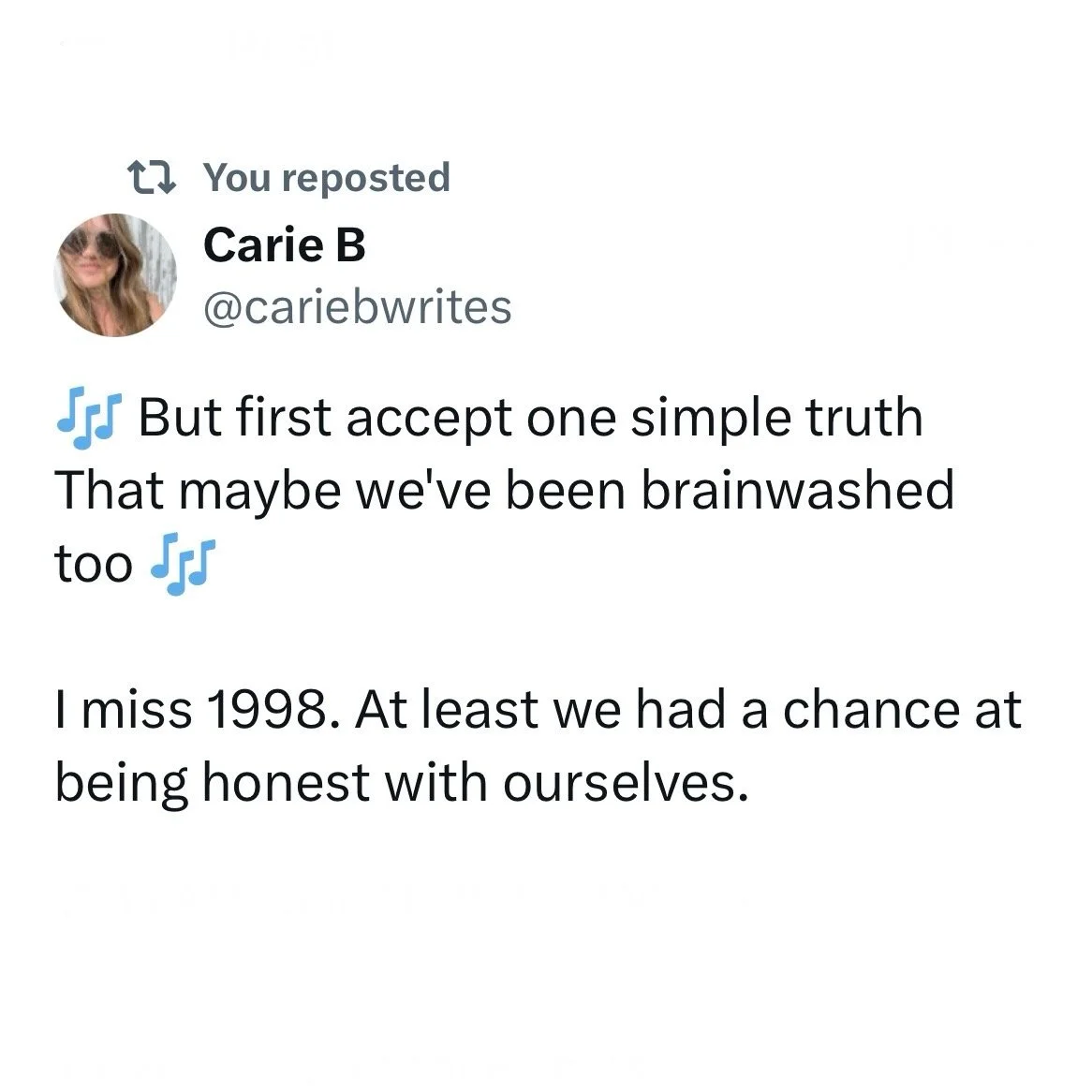
From the Twitter archives